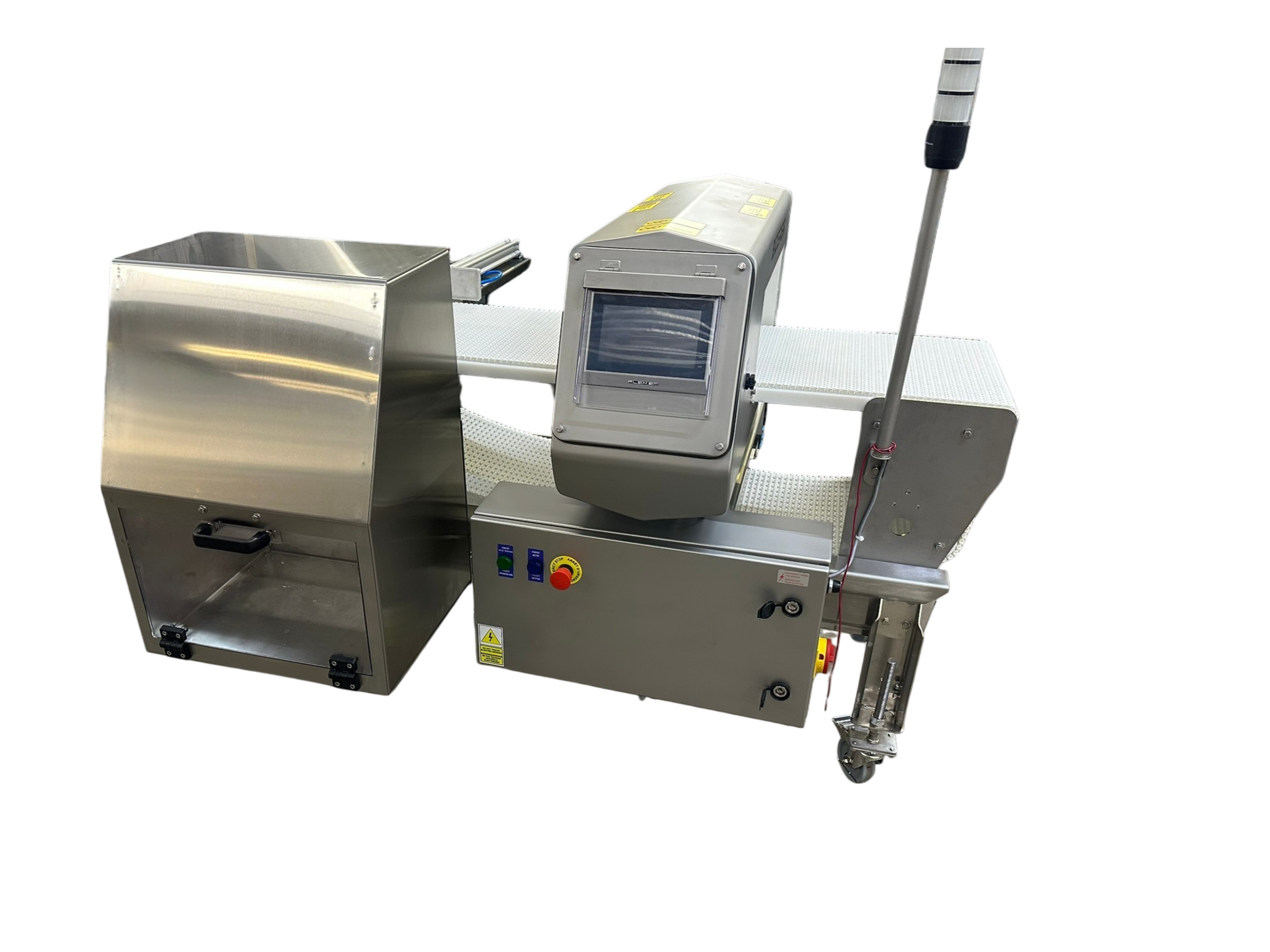
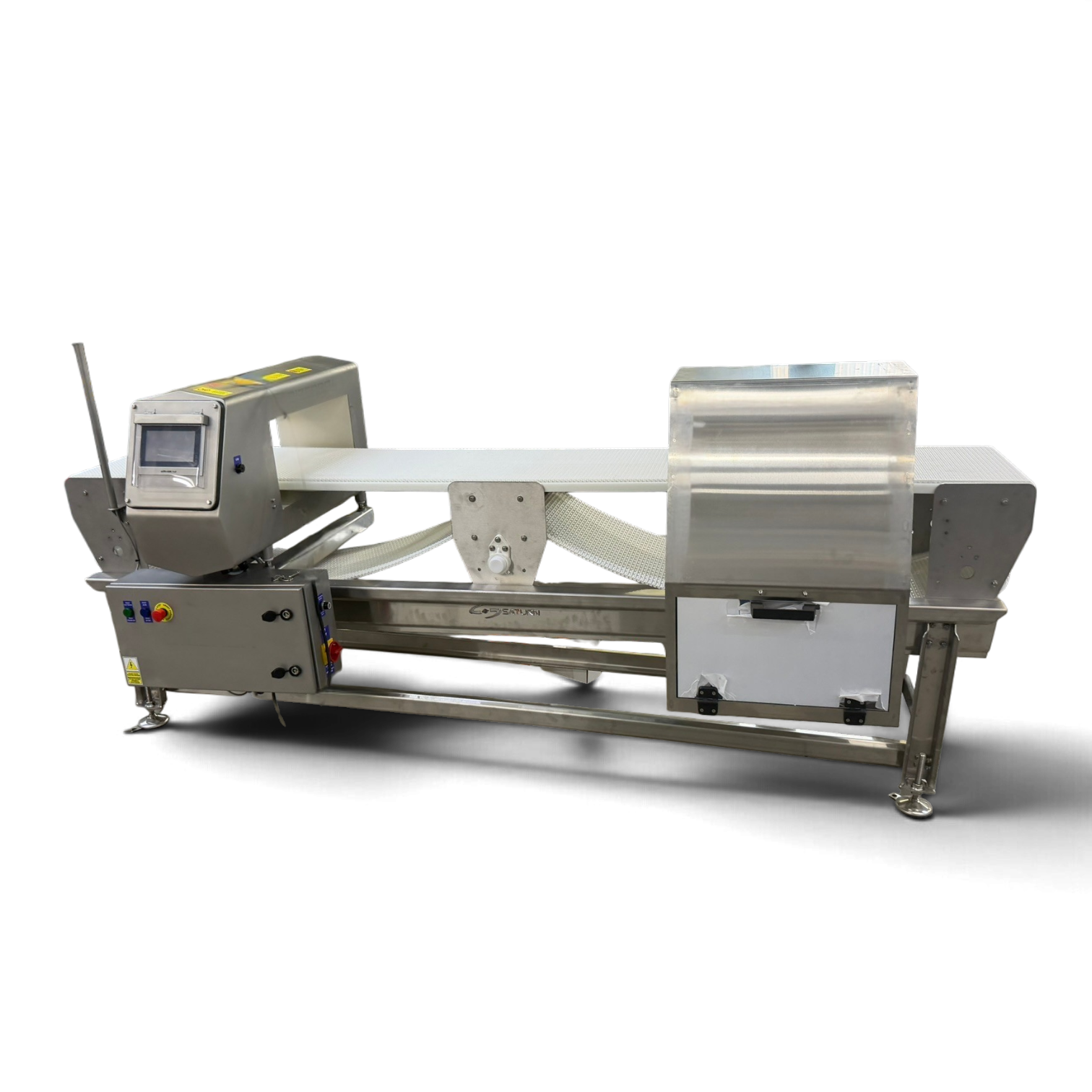
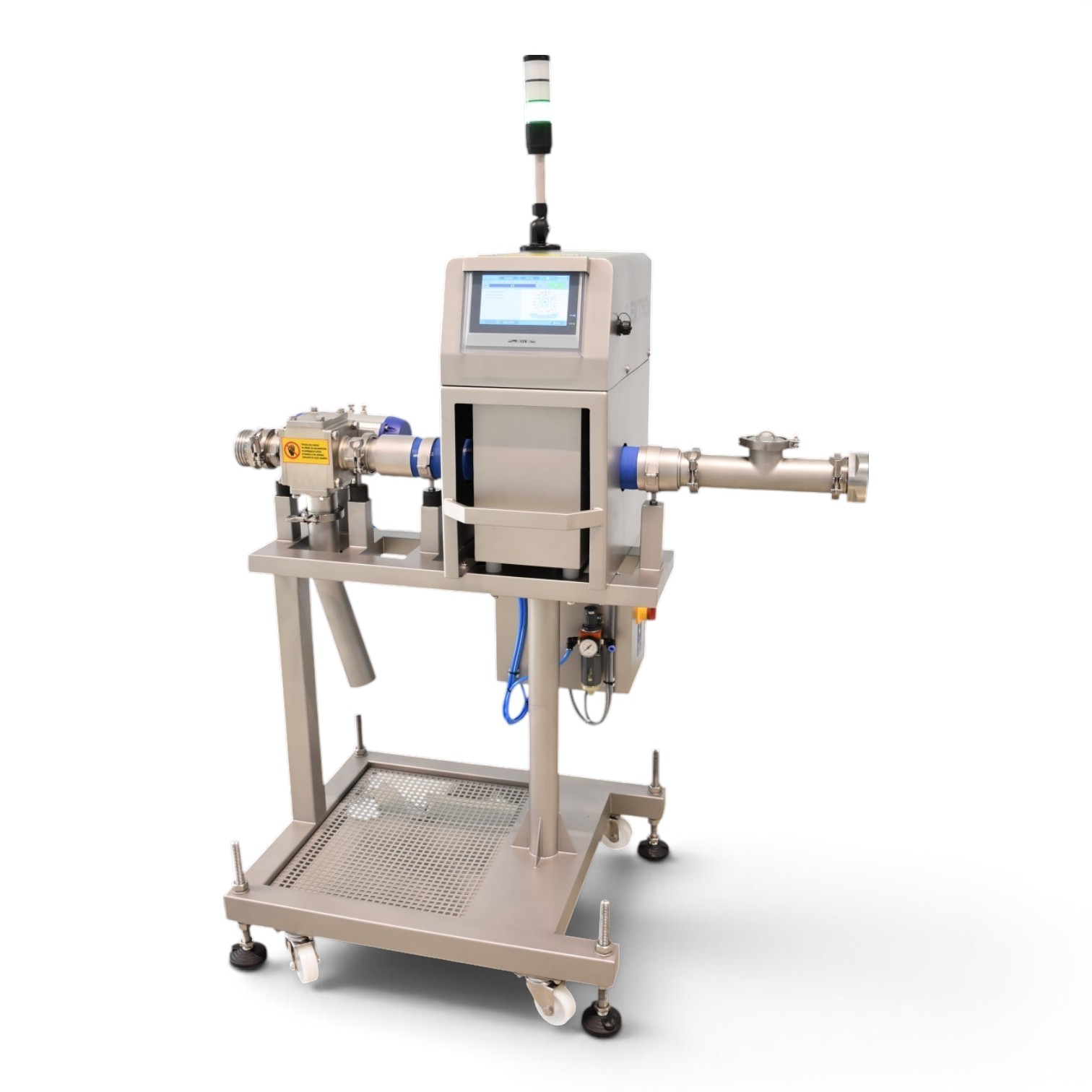
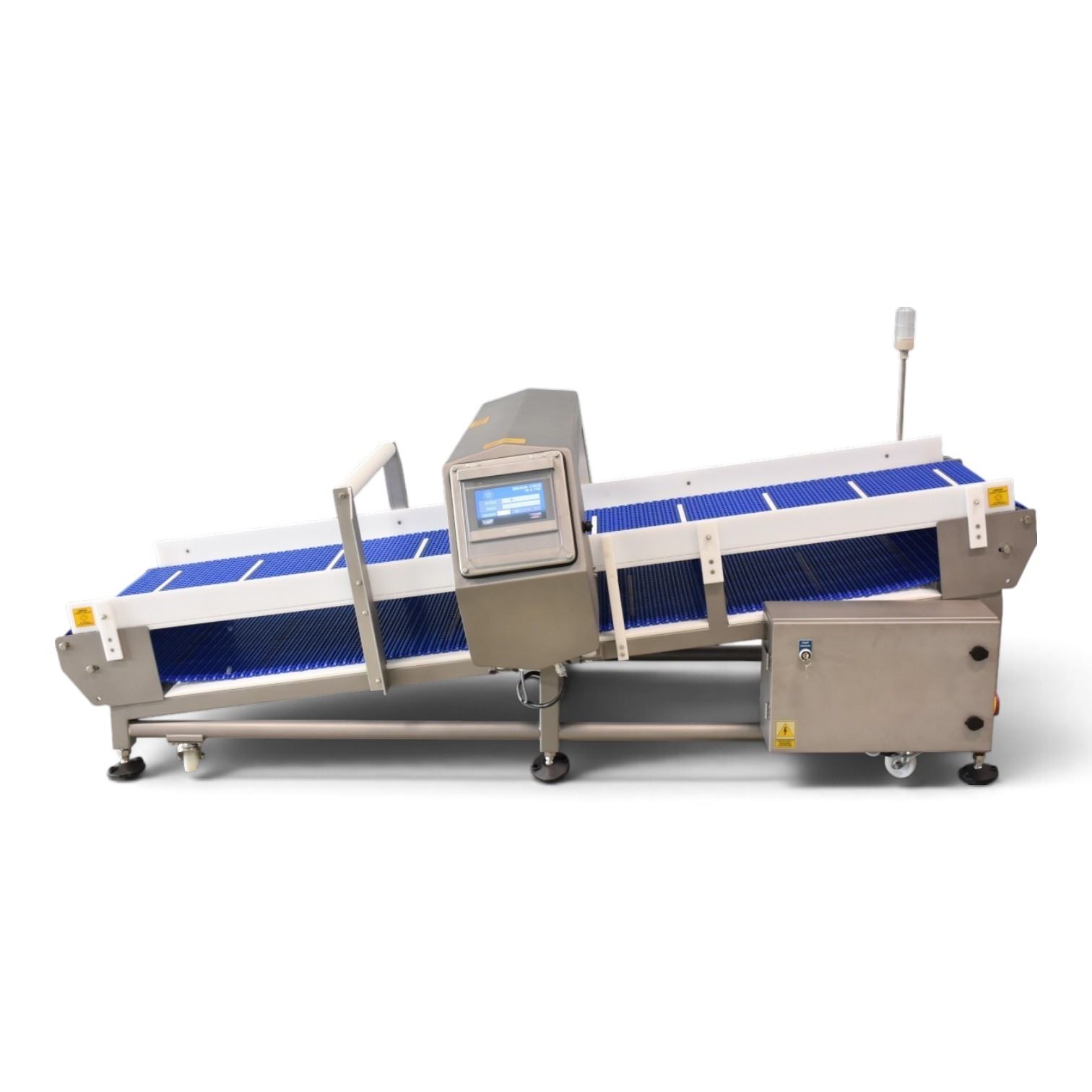
Our Industrial Metal Detection Systems provide reliable contaminant detection for a wide range of food products and packaging formats. Systems are available for small, medium and large products, with custom aperture sizes and conveyor configurations to accommodate different product dimensions and production requirements.
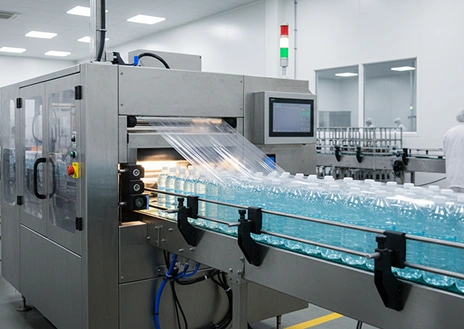
Metal detectors can inspect both packaged and unpackaged products, including meat, poultry, fish, seafood, dairy products, fruits and vegetables, bakery products, confectionery, prepared meals, frozen foods, grains, cereals, spices, coffee and other food products. They can also be configured for products packaged in materials such as plastic, paper, cardboard and glass.
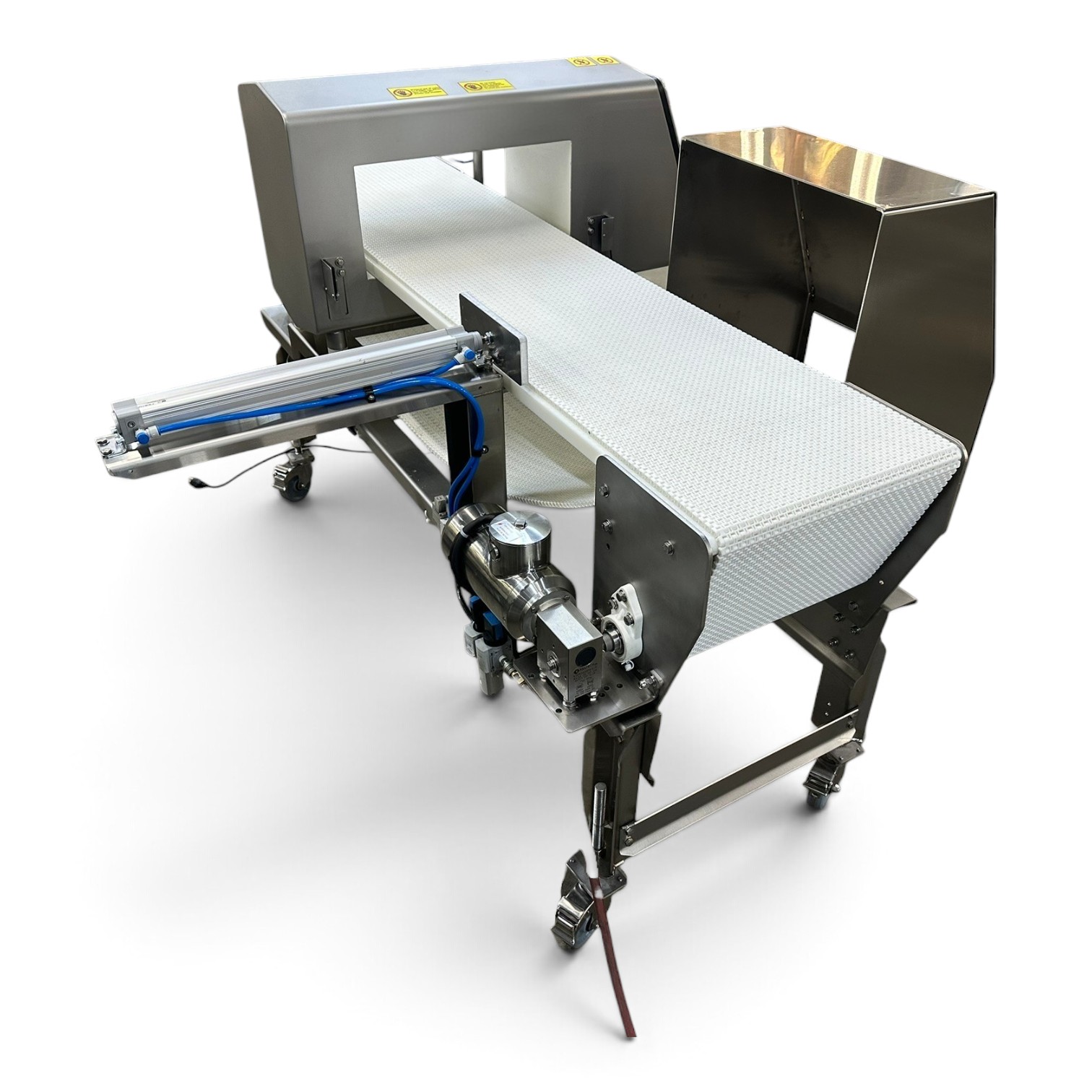
Different configurations are available according to the product and production process. Conveyorized metal detectors can inspect individual products, packages, cartons and large cases, while specialized systems are available for tall upright products, including glass and plastic bottles, jars and bags.
For bulk and processing applications, gravity-feed metal detectors can inspect dry, fine and free-flowing products, while pipeline metal detectors are available for dense or pumped products such as sausage mixtures, pâtés, jams, pastes, salads and fillings. Custom systems can also be engineered for fresh or frozen meat and fish products prior to grinding or further processing.
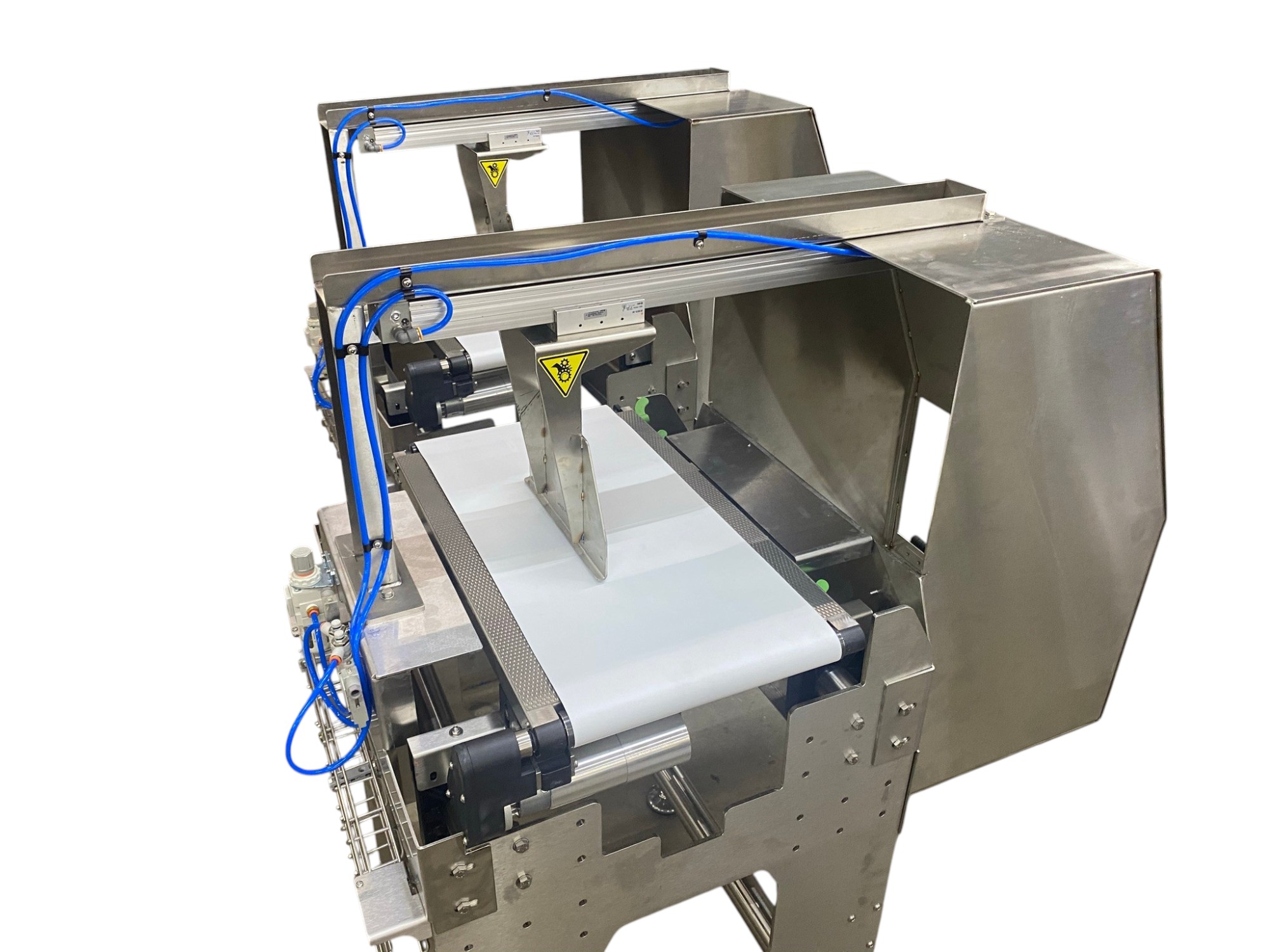
Metal detection systems can be equipped with automatic reject systems to remove contaminated products without interrupting production. Reject methods and product handling can be selected according to the package, product dimensions and application. Elektronik System specifically offers conveyor systems with integrated separators that automatically divert detected products into a reject container.
For demanding food processing environments, specialized configurations are available with features designed to simplify cleaning, sanitation and defrosting. The MD Series also offers automatic calibration, contactless auto-learning and a FROST system for challenging production environments.
Systems can be supplied as standalone inspection machines or fully integrated with conveyors, reject systems, line controls and other inspection equipment as part of a complete production or packaging line
Simple and easy to use machine with a user friendly interface to cover a vast range of packaged products: cosmetic, pharmaceutical, food, beverage, industrial product. Single or multipack products are manually loaded on the working table. The ergonomic sealing arm covers the heating element which creates the perfect seal. The motorized conveyor eases the product transfer into the heat chamber for the ultimate package.The integrated heat tunnel features a top, bottom and side heated air flow, twin blowers, teflon mesh belt that are all controlled with the SATU digital keypad